
Do Iron Supplements Cause Nausea? What Is Microencapsulated Iron? | Agis İlaç
“I Started Taking Iron but My Stomach Can't Handle It” — Sound Familiar?
Many people using iron supplements share the same complaints: nausea, cramps, constipation and that unpleasant metallic taste in the mouth. This is so common that many people give up taking the supplement regularly even though they need it.
So why does this happen and is there a solution? In this article, we explain why conventional iron formulations cause these effects and how microencapsulation technology changes the equation.
What Is the Problem with Conventional Iron Supplements?
Standard iron salts (such as ferrous sulfate) become free in the stomach environment right after being taken orally. Free iron ions:
- It can directly irritate the stomach lining
- It can create a feeling of nausea by being released quickly and intensely in the digestive system
- It can leave a metallic taste in the mouth
- It can lead to constipation by affecting the intestinal flora
For this reason, many people see iron supplements as a “necessary but hard to tolerate” routine.
What Is Microencapsulation Technology?
Microencapsulation means coating an active substance (in this case, iron) with a very thin, edible protective layer. Put simply:
Instead of being released immediately in the stomach, the iron particle is protected inside a thin “capsule” and is gradually released when it reaches the intestine.
The main differences this approach provides:
- Less contact with the stomach → The amount of free iron in direct contact with the stomach lining decreases
- The metallic taste largely disappears → Encapsulation prevents iron from contacting the taste receptors in the mouth and throat
- More gradual release → Instead of a sudden, intense release of iron, a process the body can tolerate more easily is provided
- Easier daily use → As discomfort decreases, a regular habit of use forms more easily
How Is This Technology Used in Agisfer?
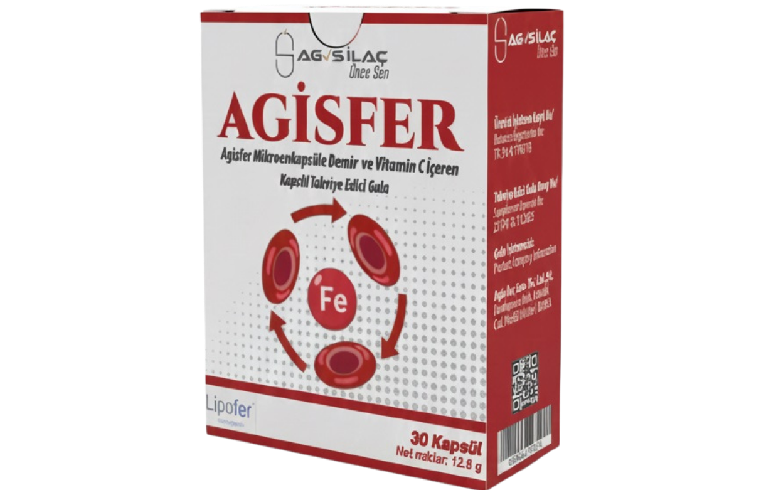
Agisfer is a food supplement developed with a microencapsulated iron formulation. The aim of this approach is to increase daily comfort of use while contributing to the normal use of iron by the body.
Iron is a mineral that contributes to normal energy-yielding metabolism, the reduction of tiredness and fatigue, normal cognitive function, the formation of red blood cells and haemoglobin, oxygen transport in the body and the normal function of the immune system.
Who Should Pay Attention to Iron Needs?
Iron needs may be more prominent in daily life in the following groups:
- Women with regular menstrual cycles
- People with an intense sports routine
- People with a diet limited in red meat
- People with a busy lifestyle and an unbalanced diet
Important note: Iron deficiency and anemia can only be diagnosed by a blood test. If you notice symptoms such as tiredness or paleness, we recommend that you consult a physician and have a test before using a supplement.
Practical Tips When Using Iron Supplements
- Taking it with vitamin C may contribute to iron absorption (such as a slice of orange or a glass of freshly squeezed fruit juice)
- Avoid taking it at the same time as tea and coffee, as these drinks can affect mineral absorption
- Leaving time between dairy products and the supplement can be beneficial
- The dosage and directions on the product label should be followed before use
Conclusion
Using an iron supplement does not have to be a discomfort that must be “endured”. Microencapsulation technology is a modern approach that aims to increase daily comfort of use while contributing to the normal use of iron in the body. Legal Notice: This content is for information purposes only; it does not replace medical diagnosis, treatment or professional health advice. Food supplements do not replace a balanced and varied diet and cannot be used in place of medicine. People who suspect iron deficiency should consult a physician.