
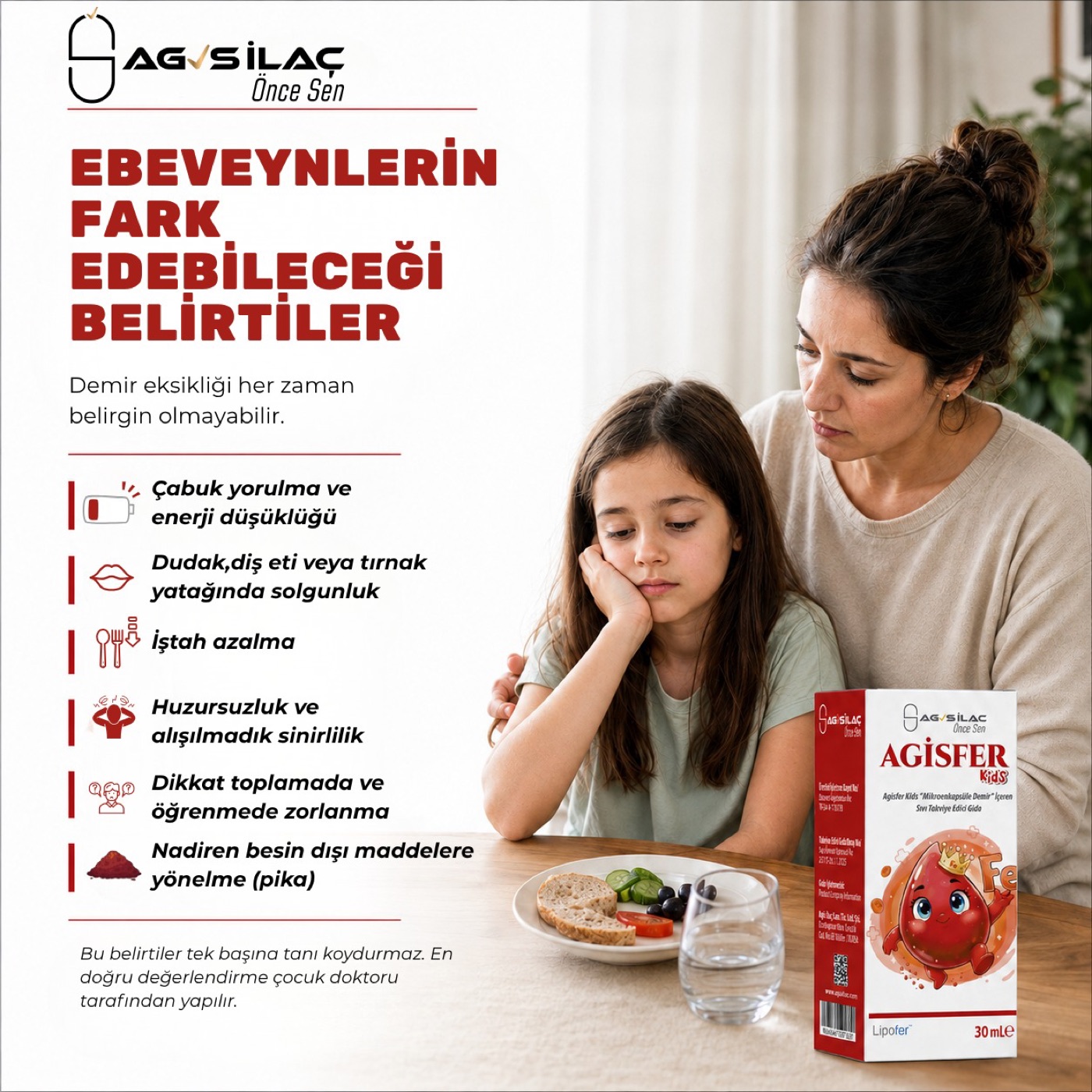
Tiredness, paleness, loss of appetite… Behind these signs, common in growing children, there may sometimes be a mineral missing from the diet. A look at the topic in the light of scientific sources.
Most parents ask the same questions at some point: Why does my child get tired so quickly? Why isn't my child as interested in the food on the plate as before? This is mostly a natural part of growing up. In some cases, however, these signs may stem from not getting enough of the iron needed during growth through the diet.
Why Is Iron So Important During Growth?
Iron is the building block of hemoglobin in red blood cells and helps transport oxygen from the lungs to other parts of the body[2]. Children's iron needs increase especially during periods of rapid growth. For this reason, iron deficiency is one of the most common nutritional deficiencies worldwide[4].
Studies in Türkiye have reported that the frequency of iron deficiency in children and adolescents varies by region, ranging between 6.5% and 42%[4].
Why the Risk Increases
| Factor | Reason |
| Rapid growth period | Increased need |
| Selective / low-variety eating | Inadequate intake |
| Excessive milk consumption | May adversely affect iron intake and absorption |
| Premature birth / low birth weight | Low iron stores |
Signs Parents May Notice
The signs of iron deficiency are often not obvious and may be dismissed with the thought “just looks a little tired”. According to information compiled by health institutions, the main signs to watch for are[3][2]:
- Tiring quickly during the day, low energy
- Noticeable paleness of the lips, gums or nail beds
- Decreased appetite
- Restlessness, unusual irritability
- Difficulty concentrating and learning
- Rarely: a desire to eat non-food substances such as soil or ice (pica)
Important: These signs alone do not lead to a diagnosis; they may also occur for many other reasons. The American Academy of Pediatrics recommends routine hemoglobin screening for all infants at 12 months[5]. The most accurate evaluation is made by a pediatrician and, if necessary, with a blood test.
Nutritional Support: Where to Start?
Red meat, liver, dried legumes, egg yolk and green leafy vegetables are among the foods rich in iron. However, getting a selective eater to consume these foods regularly is not always easy in practice. Experts state that excessive consumption of cow's milk can also adversely affect iron intake and absorption and contribute to iron deficiency[3].
At this point, families may turn to food supplements to complement a normal diet. These products are chosen to support a balanced diet, not for treatment.
What Does “Microencapsulated Iron” Mean?
One of the best-known problems with liquid iron supplements is the strong metallic taste they leave in the mouth. This can make it difficult for children to use the product regularly. Microencapsulation technology, developed in recent years, encloses the iron mineral at a microscopic scale in a protective capsule, usually based on lecithin and starch. This method helps largely mask the metallic taste and reduce the mineral's direct interaction with the gastrointestinal mucosa[6][7].
In a taste test with 100 participants, formulations containing microencapsulated iron were reported to leave less metallic taste and to have high taste acceptability[7].
Quick Look — Agisfer Kids
| Active Ingredient | 1 ml (mg) | %NRV |
| Iron | 8,5 mg | %60,714 |
What Do Families Look for When Choosing a Liquid Iron Supplement?
- Ease of use: A liquid form easily measured with a dropper
- Taste: A formula the child can easily accept, without a strong metallic taste
- Ingredient transparency: Amounts and %NRV values clearly stated on the label
- Origin and production information: Stating where and by which company the product is made
Warnings
Agisfer Kids is not a medicine; it is not intended to prevent or treat diseases. Food supplements do not replace a normal, balanced diet.
Do not exceed the recommended daily intake. Always consult your pediatrician before adding a new supplement to your child's diet. Store the product in a cool, dry place out of the reach of children.
References
- Iron deficiency in children: Prevention tips for parents — Mayo Clinic, updated: February 2024
- Anemia caused by low iron – infants and toddlers — MedlinePlus Medical Encyclopedia, US National Institutes of Health (NIH)
- What Causes Iron Deficiency in Your Child (and How to Spot It) — Cleveland Clinic
- Iron Deficiency Anemia in Infancy, Childhood, and Adolescence — Aksu T, Ünal Ş. — Turkish Archives of Pediatrics, 2023;58(4):358–362
- Iron-Deficiency Anemia in Children — Nationwide Children’s Hospital
- Lipofer™: A tasteless, non-pro-oxidative source of iron — Elementa Ingredients, technical product information
- Lubrizol’s microencapsulated iron ingredient Lipofer outperforms conventional options in study — Nutrition Insight, October 2025